Supporting a Safer Recovery at Home After Hospitalisation
For many older Australians, the period immediately following a hospital discharge can be a vulnerable stage of recovery.
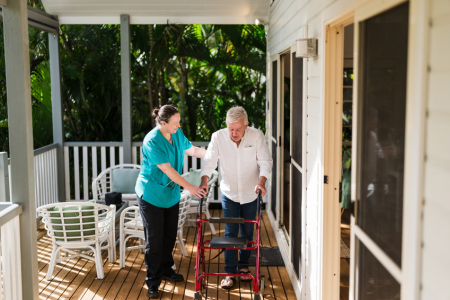
Reduced mobility, fatigue, medication changes, and difficulty managing daily tasks can increase the risk of falls, functional decline, and hospital readmission. Restorative Care pathways available through the Support at Home program or private pay options can help older people recover safely and maintain their independence.
What is Restorative Care?
Restorative care focuses on short-term, goal-oriented support designed to help older people regain function, confidence, and independence following illness, injury, surgery, or hospitalisation. The aim is to support recovery and help individuals safely resume everyday activities. This may involve coordinated support, including nursing, physiotherapy, wound management, assistive technology, mobility support, and transport assistance tailored to the person’s recovery goals.
Rebuilding Independence After a Fall
John*, 82, lives with his wife in their rural family home. Earlier in the year, a fall resulted in a total hip replacement. Following discharge from hospital, he faced significant mobility limitations and was unable to drive. His wife, Jenny* was extremely frail, and had limited capacity to assist with his recovery.
Following his My Aged Care assessment, John was approved for the Restorative Care Pathway after assessors identified that short-term support could improve his mobility and reduce further decline. Right at Home coordinated John’s care plan including regular reviews involving a registered nurse, physiotherapist, occupational therapist, and his family to monitor progress and adjust his support as required.
Practical interventions included exercises to rebuild strength and balance, grab rails and mobility aids to improve safety, and assistance attending GP and therapy appointments while John was unable to drive. Importantly, the support extended beyond physical recovery alone. Transport and domestic assistance reduced strain on John and his wife, while ongoing monitoring helped identify risks and recovery barriers early.
“I didn’t realise how much I could improve at my age," John says.
"With the right support and encouragement, I’m back doing things I thought I’d never do again.”
After 12 weeks, John regained enough strength and confidence to resume driving and return to his usual routines.
Key Considerations for Health Professionals
For healthcare professionals, cases like John’s highlight how coordinated home-based support may reduce functional decline and support safer recovery following hospitalisation. Right at Home is a leader in quality home care and support, delivering services that allow clients to remain safe and independent in their own home. We care for both government funded and private pay clients. Explore ways Right at Home can help and download our Understanding Support at Home Case Studies to find out more.
*Names have been changed for privacy reasons.
Right at Home Australia is a leading provider of quality in-home care. Our mission is to improve the quality of life for those we serve, ensuring the Right Care, Right at Home™. We are an Approved Provider under the Aged Care Act, providing quality government-funded Support at Home. Our services ranges from everyday assistance such as domestic help, personal care, companionship and transport, through to nursing, allied health, post-operative care, and support for people living with dementia and cognitive decline. Our tailored services help clients to remain safe and independent in their homes. We also offer private pay arrangements for those who do not have government funding or who wish to pay privately for top-up care. Right at Home is all about you. We are available 24/7, so contact your local office today. You can also call our national number on 1300 363 802.
This information is general in nature and does not constitute medical, legal or financial advice. Please seek appropriate professional advice for your individual circumstances. Services are subject to availability and individual eligibility, including applicable funding criteria. Any examples or case studies are illustrative only. Individual experiences and outcomes may vary. Services are delivered by independently owned and operated franchisees under a franchise agreement with Homecare Group Pty Ltd. Experiences may vary by location. To the extent permitted by law, we exclude liability for reliance on this information. Nothing in this material excludes or limits your rights under Australian Consumer Law.
Right at Home Offices in Australia: ACT & Queanbeyan; ACT Canberra; Adelaide Central; Brisbane Bayside South; Brisbane North; Brisbane South; Brisbane West; Central Queensland & Wide Bay; Central West New South Wales; Darling Downs; Far North Queensland; Geelong; Gold Coast North; Gold Coast South; Goldfields Grampians Murray; Gosford; Greater Logan; Hunter & Port Stephens; Ipswich Lockyer Valley; Kalgoorlie Wheatbelt; Macarthur Penrith; Mackay; Melbourne Berwick; Melbourne Brighton; Melbourne Frankston; Melbourne Glen Waverley; Melbourne North; Moreton Bay Region; Newcastle; Newcastle Toronto; Noosa, Gympie & Hinterland; North Queensland; Northern Rivers; Northern Territory; Perth Midland; Perth Northern Suburbs; Perth South; Perth South Eastern Suburbs; Perth West Coast; South West WA; Southern NSW; Southwest Victoria; Sunshine, Caloundra & Maleny; Sunshine, Maroochy & Nambour; Sydney Central & Eastern Suburbs; Sydney Five Dock; Sydney Inner West; Sydney Liverpool; Sydney Lower North Shore; Sydney Northern Beaches; Sydney Norwest; Sydney Parramatta; Sydney Randwick; Sydney Ryde; Sydney St George; Sydney Sutherland Shire; Sydney The Hills; Sydney Upper North Shore; Western NSW

Our Locations
Queensland
New South Wales
Western Australia
Victoria
Australian Capital Territory
South Australia
Northern Territory
Our Locations
Brisbane Bayside South
Brisbane North
Brisbane South
Brisbane West
Central Queensland & Wide Bay
Darling Downs
Far North Queensland
Gold Coast North
Gold Coast South
Greater Logan
Ipswich Lockyer Valley
Mackay
Moreton Bay Region
Noosa, Gympie & Hinterland
North Queensland
Sunshine, Caloundra & Maleny
Sunshine, Maroochy & Nambour
Central West New South Wales
Gosford
Hunter & Port Stephens
Macarthur Penrith
Newcastle
Newcastle Toronto
Northern Rivers
Southern NSW
Sydney Central & Eastern Suburbs
Sydney Beverly Hills
Sydney Five Dock
Sydney Inner West
Sydney Liverpool
Sydney Lower North Shore
Sydney Norwest
Sydney Northern Beaches
Sydney Parramatta
Sydney Randwick
Sydney Ryde
Sydney St George
Sydney Sutherland Shire
Sydney The Hills
Sydney Upper North Shore
Western NSW
Home Care Information
My Aged Care Resources






© Copyright 2026 Homecare Group Pty Ltd ABN 31 166 722 658 ALL RIGHTS RESERVED
Right at Home, Level 1, 12 Cribb Street, Milton, Brisbane QLD, Australia 4064